Technical communication · Editorial design · Production coordination
Explaining the game to players and the people building it.
Two kinds of documentation, two very different audiences: a visually organized rules manual for players and implementation notes for programmers and artists.
At Fringe Games I worked on both audience-facing materials and the internal communication needed to turn design decisions into working assets and behavior. These samples illustrate how I combined copywriting, layout, diagrams and practical explanations.
01 / Player-facing documentation
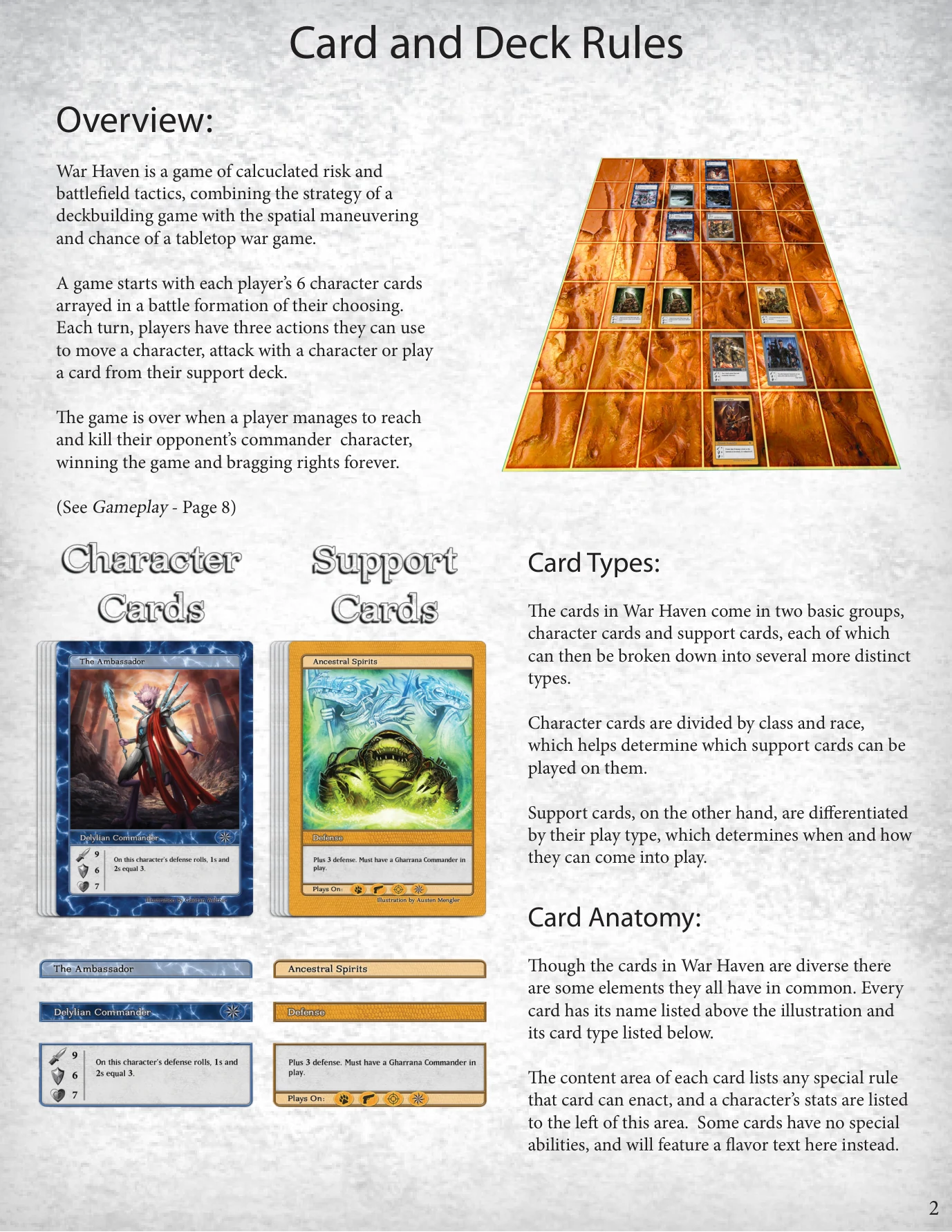
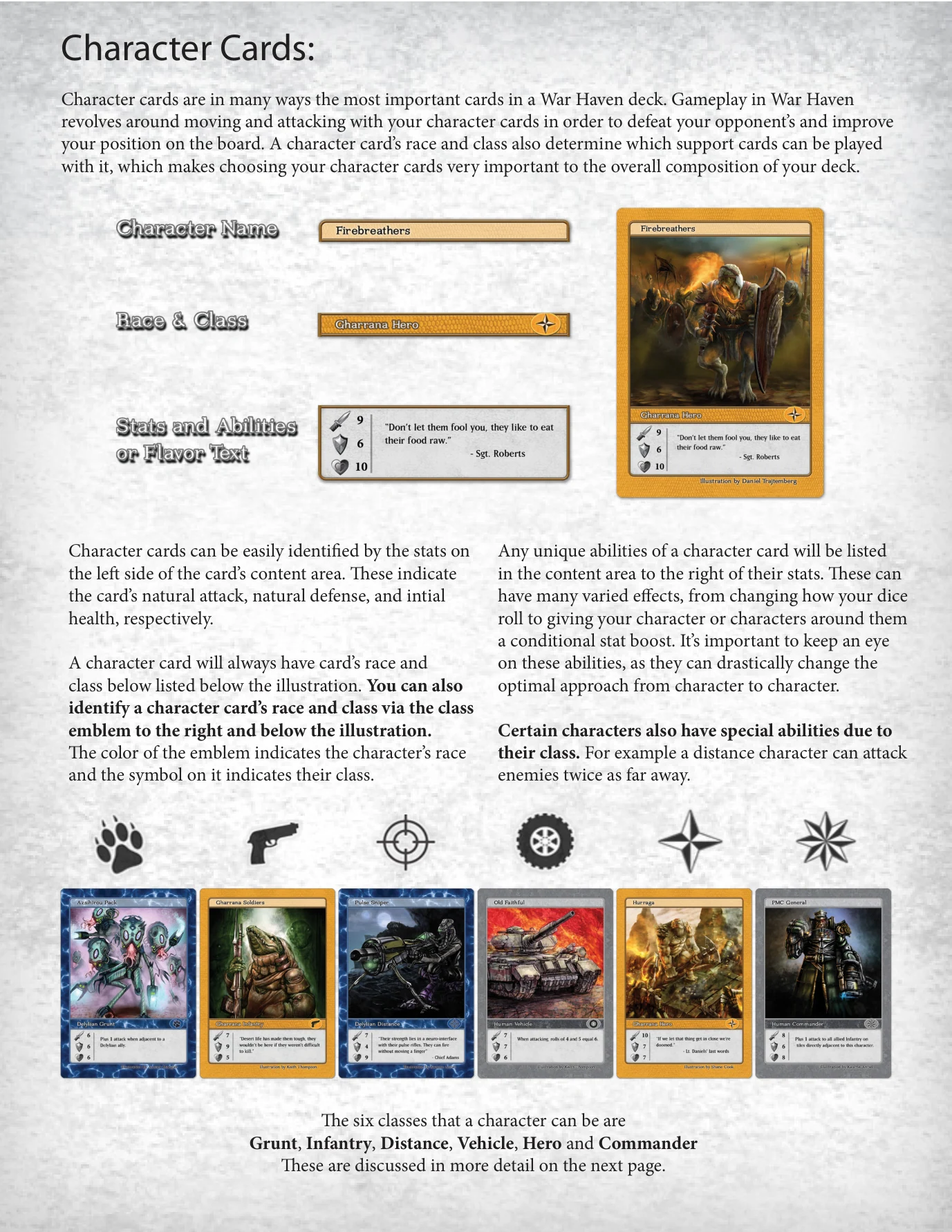
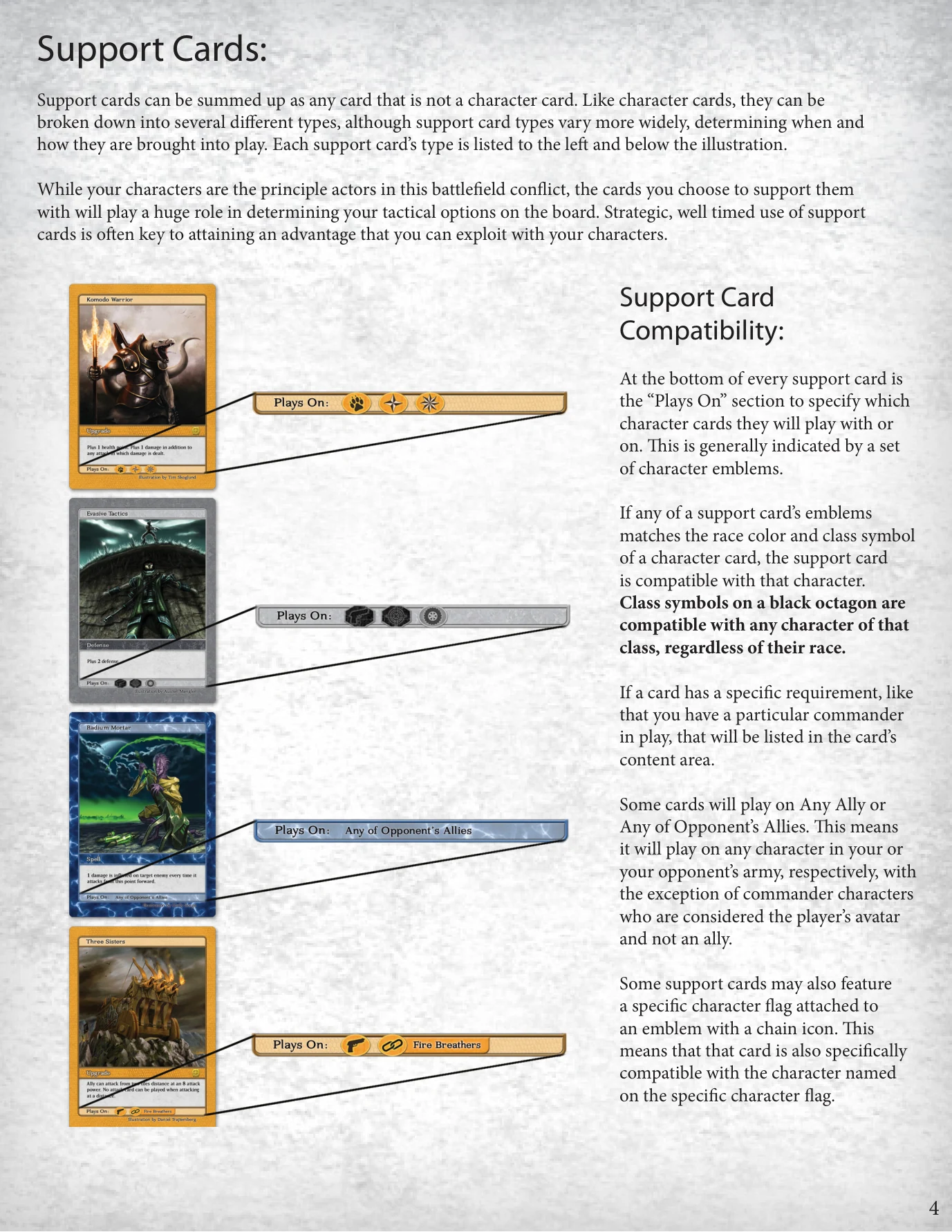
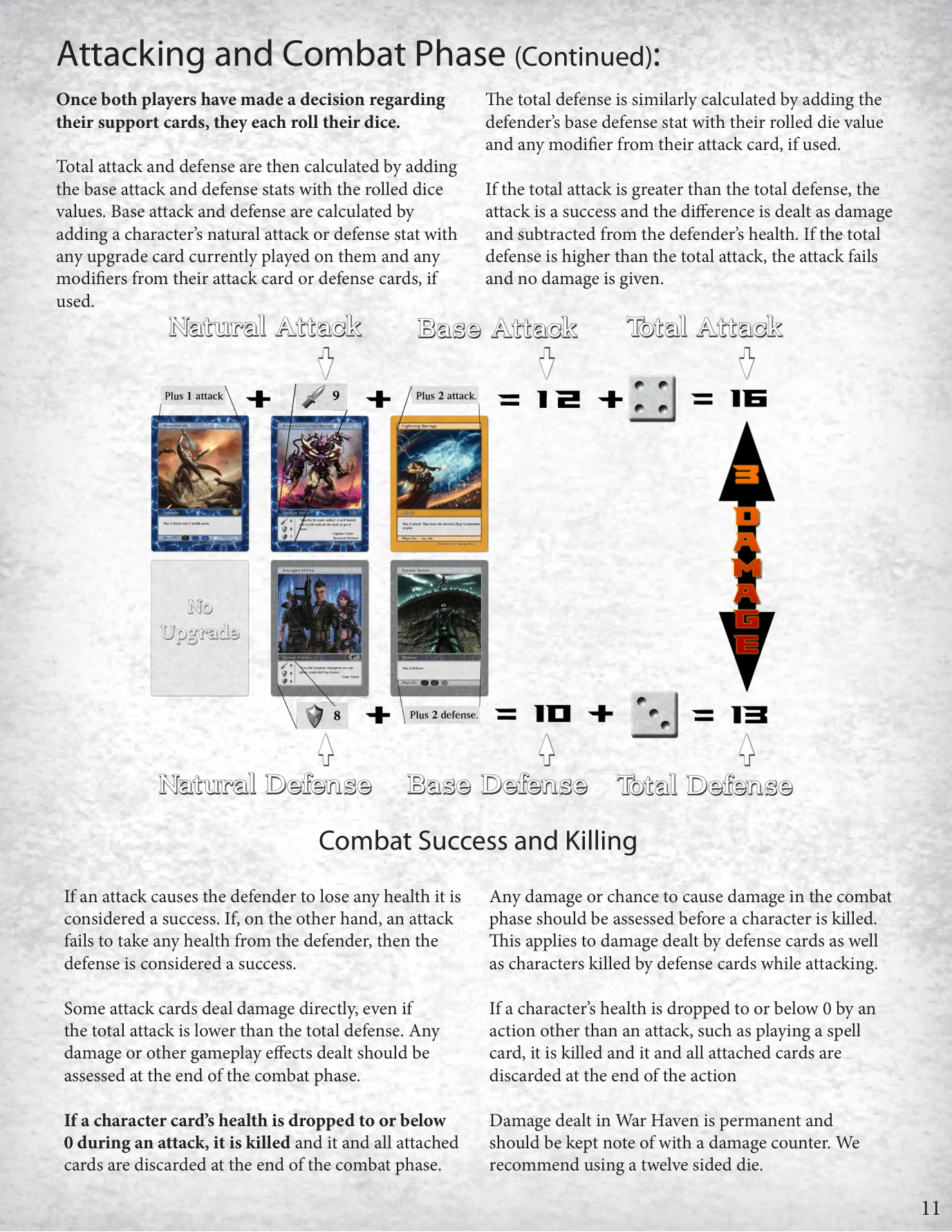
War Haven illustrated instruction manual.
I wrote and laid out an illustrated rules manual in Adobe InDesign, using cards, diagrams and examples to make a layered strategy game easier to learn. The selections below show how card classes, compatibility rules, and battle resolution were communicated visually alongside the written rules.
02 / Internal production communication
Turning a design idea into an implementation brief.
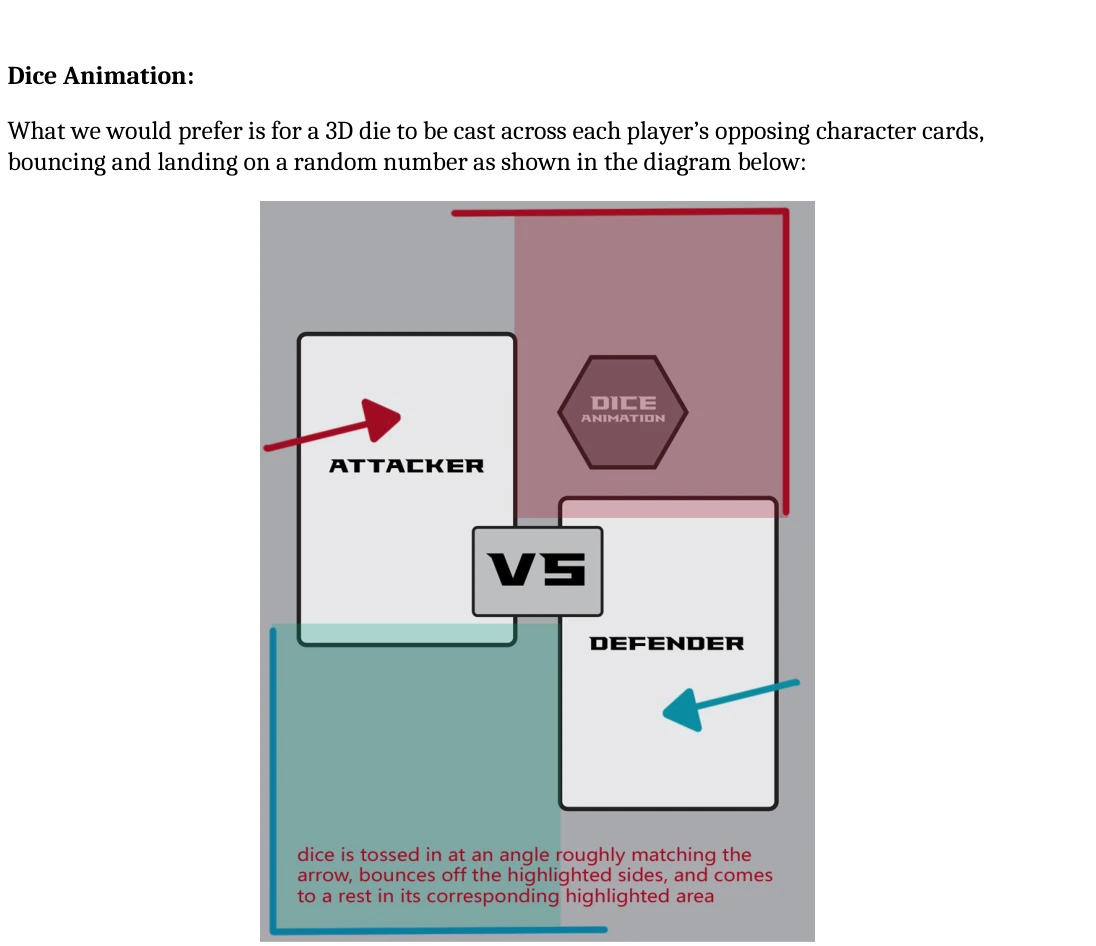
Because I was involved in design and card balancing, and already had experience in programming and digital art production, I could help the designers, artists and programmers understand one another’s requirements. The internal game design document recorded rules, interface behavior and implementation expectations. This excerpt illustrates one example: a dice animation specification that maps the movement of each die, the competing character panels, and the display of the final result.
From game balance to implementation
I also developed an internal card-balancing tool that could simulate thousands of attack and defense rolls between chosen card combinations. It gave the design team a way to find troublesome interactions and assess changes before committing them to the game.
That hands-on work shaped my role coordinating across disciplines. I understood the gameplay decisions, the programming needed to reproduce them, and the visual assets artists would have to deliver. The annotated dice-roll diagrams gave everyone a shared reference for movement, timing and on-screen results.
Selected page from a larger internal production document.
Related work
From documentation to publicity.
These same skills carried into my press-kit preparation, Kickstarter communications, and promotion: adapting complex project material to the information needs of different audiences.